In Swiss train stations, airports and village kiosks, a gold‑wrapped bar catches every traveller’s eye: Toblerone, the triangular chocolate that for many has become the safest and sweetest Swiss souvenir. Behind its familiar peaks, though, lies a story almost as jagged as the legendary mountain that inspired it: the Matterhorn.
From Bern to worldwide fame
In 1908, in Bern, Theodor Tobler and his cousin Emil Baumann created a chocolate unlike any other of its time: a bold mix of milk chocolate, honey and almond nougat, poured into a long row of sharp‑edged triangles. The name “Toblerone” blended Tobler’s surname with the Italian word “torrone”, a nod to soft nougat and to Europe’s shared confectionery culture.
At a time when most chocolate was flat or square, Toblerone broke the rules. Its shape instantly suggested mountains, movement and modernity. It became the chocolate of travel: easy to share, unforgettable in photos, and always a little theatrical to break apart.
A bar that mirrors a peak
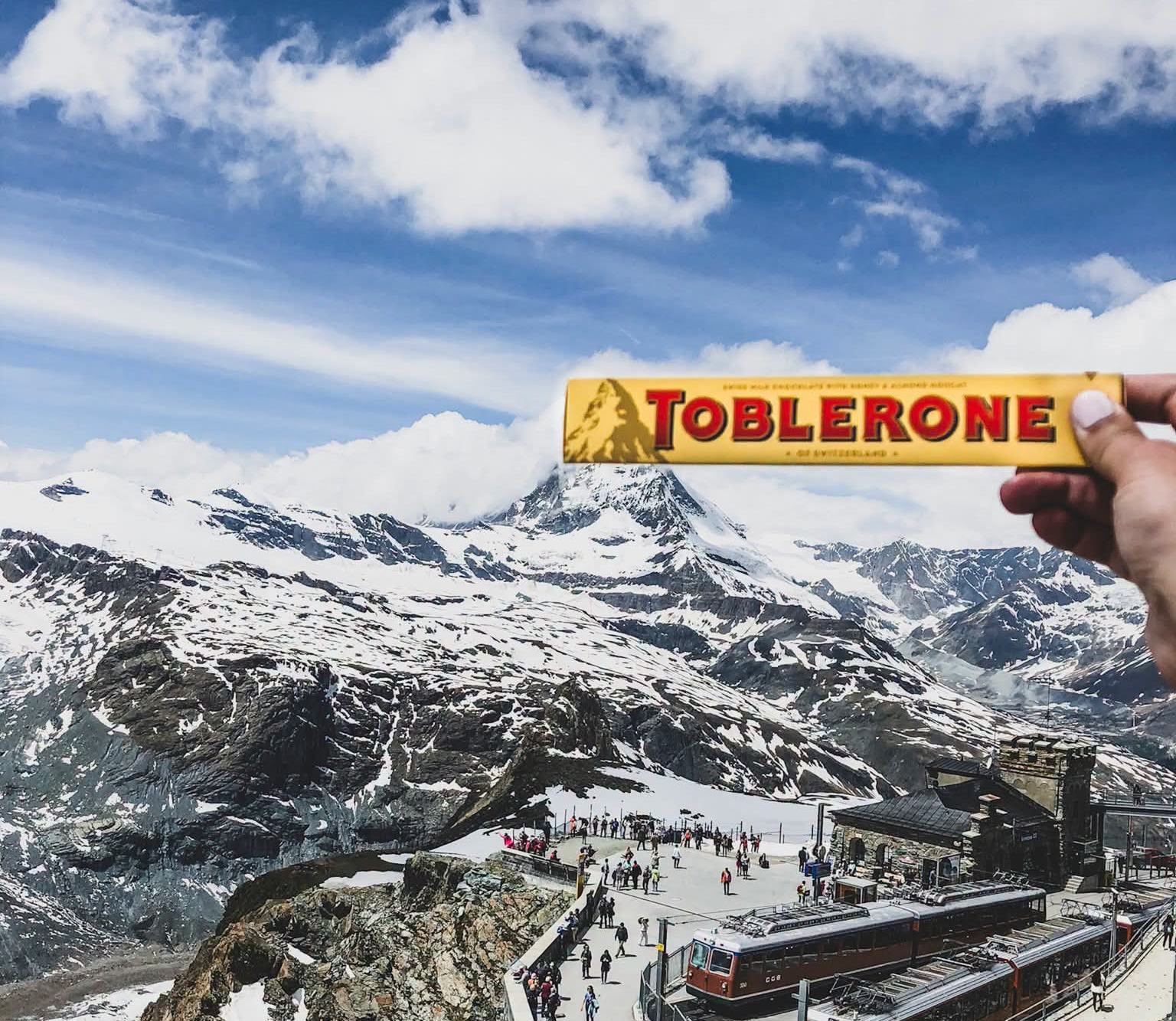
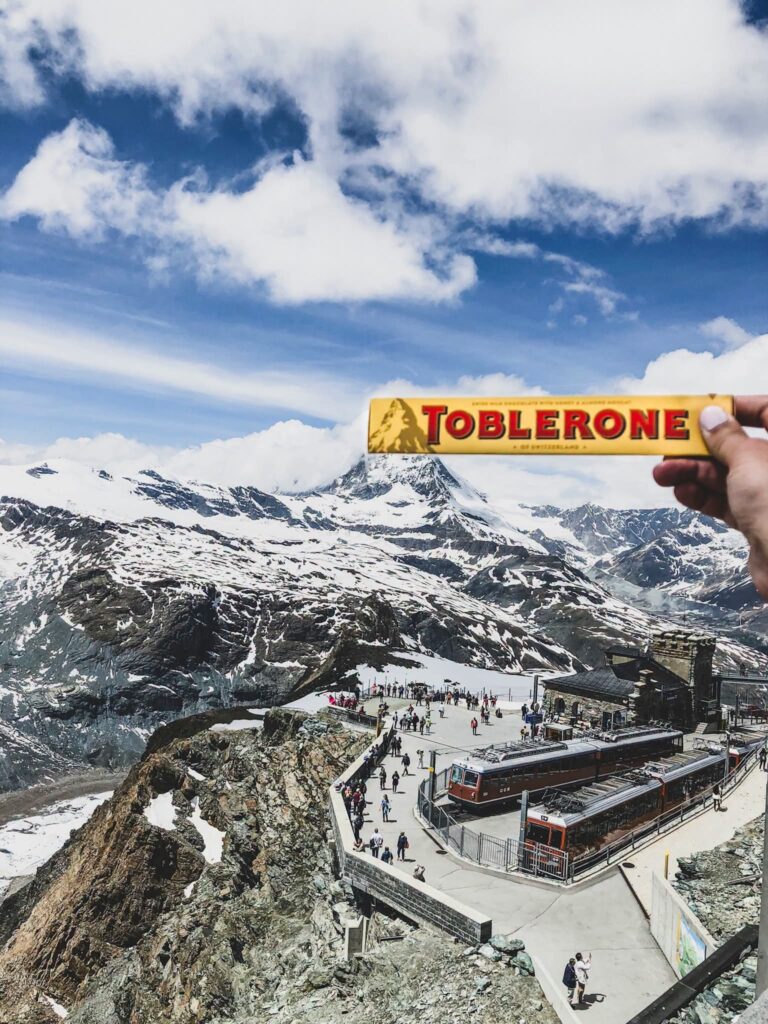
Nowhere is the connection clearer than in Zermatt. Visitors love to hold a Toblerone in front of the camera, with the real Matterhorn rising perfectly behind it. The bar’s triangular silhouette seems to extend the serrated skyline of the Alps; for many, it is the mountain you can actually taste.
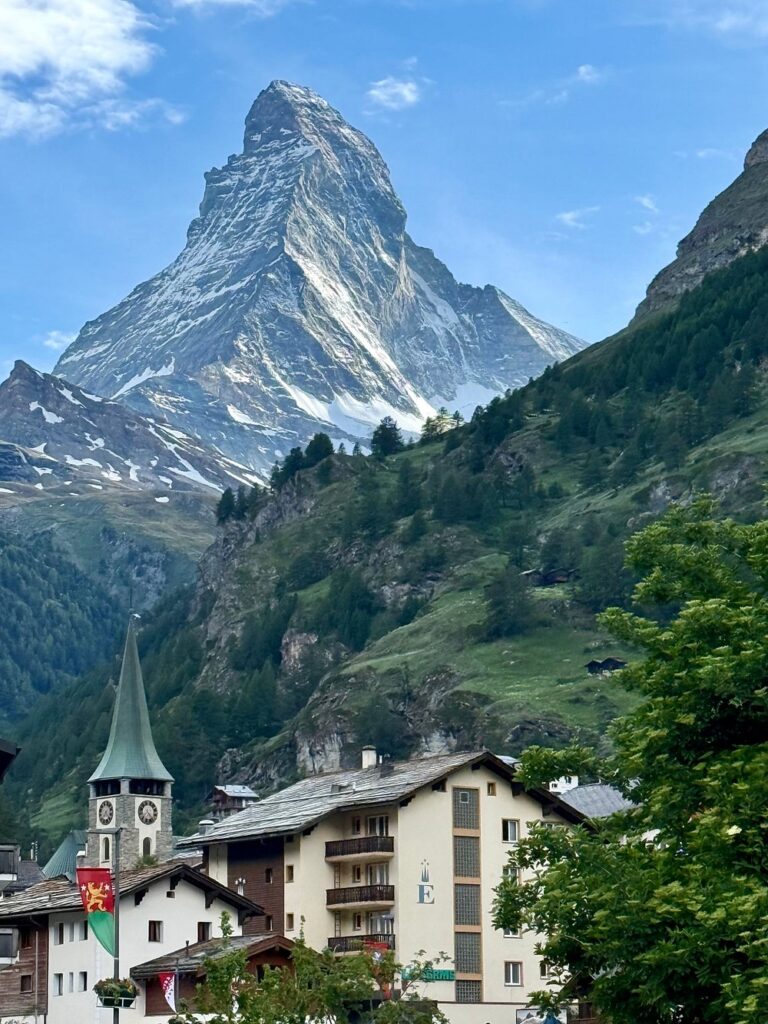
From the 1970s onwards, the link became explicit. The packaging began to show a stylised Matterhorn, and hidden within its outline, a tiny bear – symbol of Bern, the city where Toblerone was born. Spotting the bear turned into a quiet game on trains and cable cars: a small ritual before the first bite.
When “Swissness” changes the wrapper
Then came a legal twist. Under Switzerland’s strict “Swissness” rules, only products that are almost entirely made in the country can display strong national symbols such as the Swiss flag or an unmistakable Alpine peak like the Matterhorn. For food, that means high Swiss content in ingredients and production.
In 2023, Toblerone’s owner, Mondelez International, moved part of the production to Slovakia to meet global demand and lower costs. The bar was still rooted in its Bernese history, but no longer “Swiss enough” by law to carry the Matterhorn on its wrapper. The iconic peak quietly disappeared, replaced by a more generic, less locatable mountain. Mentions of “Made in Switzerland” were softened into lines like “Established in Switzerland”, shifting the emphasis from current origin to historic roots.
What do we lose when the mountain goes?
For international travellers, Toblerone has never been just a chocolate bar. It is a pocket‑sized piece of Switzerland that slips into a suitcase, is shared on a balcony above a lake, or opened on a train while the Alps glide past the window. Losing the Matterhorn on the packaging raised an uncomfortable question: does the brand lose part of its soul, or simply adapt to a globalised world?
Marketing experts argue Toblerone is now so deeply embedded in popular culture that it can survive without the mountain. The triangular shape, the colour, the taste and the story are strong enough on their own. Yet for visitors who carefully curate every detail of their “Swiss experience” from local cheese to panoramic rail journeys, the absence of the Matterhorn is a reminder that even the most solid symbols can shift.
A small bar, a big story for travellers
For guides, local agencies and platforms like Swixplore, Toblerone remains a tiny but telling part of the Swiss narrative. One simple chocolate opens the door to conversations about Bern’s confectionery heritage, the drama of the Matterhorn, and the tension between authenticity, law and global production.
On a clear day in Zermatt, someone will always unwrap a Toblerone on a rock, angle it carefully towards the real mountain, and capture the shot. Even if the Matterhorn no longer appears on the wrapper, the emotional link between the taste of the chocolate and the landscape of Switzerland is still there, a sweet memory that continues to travel long after the Alpine trail has ended.